
Lizaveta brought out the black-and-white speckled composition notebooks she had purchased that morning and arranged them on the dorm desk. She opened one and smelled deeply of the blend of wood pulp, glue, and ink. With the familiar scent, a thrill ran through her, mixed with guilt: exhibits hypergraphia. She could not help but recall the discouraging phrase from her psychiatric file, secretly glimpsed. But she had to admit it described her behavior, at least since around twelve, when she first started staying up late, her brain buzzing, a dozen library books surrounding her in bed, their plastic-encased covers comforting and alluring, like teddy bears or talismans, and her tiny script filling page after page in violet ink. During these not infrequent spells, which resulted in the awkward habit of falling asleep in class, she had the sensation she was reading all the books at once, precisely as she was also transposing her thoughts into writing. In this manner, Liza averaged some thirty composition notebooks a year. They came to fill her bookshelves, making for a lovely sight upon waking, which in the haze of interrupted dreams offered the solace of something like—evidence of my existence!
But it was to be different, this time, age twenty-one, giving college a second go. She could not risk giving her old intoxications any reign. She opted for pencils, forgoing violet-inked ballpoints with only the faintest constriction of her heart. Per the agreement with her parents that resulted in this fresh start, occurring at her father’s small alma mater, theorized to be less likely to result in a repeat of the disastrous episode at the larger university, she would not be a comp lit major anymore. In fact, she had to agree not take any literature classes at all. Her mother blamed, and the evidence was strong, literature, and Anna Karenina and House of Mirth specifically, for everything that had happened. Both novels evidently featured heavily in the delirious ravings (half-undressed in the quad) that sent her out of university two years ago and into a weeks-long mental hospital stint and of which Liza, thankfully, remembered close to nothing. The faint snatches that did sometimes (and increasingly) come to her were enough to make her wince.
She unfolded her schedule and copied it into the front page of each notebook. Her four classes were all chosen to be as dry and uninspiring as possible: Statistics, Linguistics, Geology, Russian II; the last one was the only that might be predicted to cause some agitation, with its potential for passing reference to Chekhov or Tolstoy, but she gained her mother’s approval by appealing to her dismay regarding her progeny’s limited connection to her heritage, despite Liza being named after the great-grandmother who had arrived in the United States from no-longer-czarist Russia in the early twentieth century. Liza was further armed with a Lexapro prescription (she had already gained ten pounds and all but lost the urge to rub herself against her bedsheets) and a weekly appointment with a psychologist whose white eyebrows shot up when he spoke.
“Do I have hypergraphia?” she asked him once.
“Do you think you do?” The eyebrows took flight.
“I think I used to, maybe,” she finally replied.
But even if it were factually accurate, hypergraphia seemed nonetheless false, inadequate in some fundamental way. There was no room in it for the sparkling perfection she knew when sentence from sentence, her writing seemed to come alive, breathing and blinking on the page, like some wild mythical creature with a thousand eyes and mouths and feathered wings, possessing a brilliance far beyond the sum of her thoughts. During these moments—and they could last for hours—she felt she was high above the world, inhaling the rarified air. Afterward, closing her notebook with the pages newly crinkled by violet ink, she was left limp and languid.
A symptom listed in a DSM-IV diagnosis captured none of that. Still, after all that happened, there was no denying that her deepest gratification was also her greatest susceptibility, and as she wanted some kind of future, however dimly imaginable, as well as her parents’ respect, Liza knew she could not let this chance slip by. She took out her linguistics textbook, which creaked as she opened it to the introduction, and placed a notebook beside it. Soon she was pressing a lead point across the page. There was still a pleasure found in the physical act of writing, in seeing the familiar loops of letters come from her hand.
Dr. Adams always wanted Liza to revisit precisely what she wanted to shut out entirely—her childhood, which had been so lonely and muted and gray, her relationship with her family, as well as everything surrounding the Crack-Up of ’09, as she came to call it. Her parents now rarely referenced the time at all, at least after the initial fallout and subsequent imposition of various restrictions, when they called it “Lizaveta’s poor choices,” a phrase that seemed to both cover and misunderstand so much that she felt almost unendurably helpless and ashamed. Her psychologist was especially interested in the awful incident with the nosebleed and as she answered slowly his questions, she seemed to relive it all there in the room.
By the time Liza was born, her parents had already been married for eighteen years and had three children (now a lawyer, doctor, and ivy-educated stay-at-home mother). Into this established atmosphere, Liza had the sense she was in some way superfluous, an afterthought, if not an actual nuisance, a state exacerbated by what seemed a massive difference in sensibilities. She came to realize quite young—and on this Dr. Adams often wanted to dwell—how much she yearned for a loving embrace that never came. Her envy at the easy physical intimacy of her friends with their parents was so acute as to be literally painful.
When she tried to imagine her mother taking care of her when she was a newborn, tiny and vulnerable, with the requisite tenderness and patience, her mind blanked. So rare was a maternal touch that Liza could vividly recollect the momentary coolness on her forehead when she had scarlet fever at eight. Her father was even more stand-offish, so that when she saw a photograph of herself as a toddler splayed happily on his lap, it came as a shock. She could not remember such closeness. When did it go away? Perhaps, more likely, it was only a fleeting interaction, a few seconds misleadingly immortalized by a camera to trick the grown-up child.
Liza’s primary impression throughout her girlhood was that of being misunderstood. Neither parent cared for animals, refusing her recurrent requests for a pet. They always put her off by saying “maybe next year” and Liza’s first sense of a break with reality came when she finally understood that it would never happen. She was eleven and seated in the backseat as they drove home from a dinner party, when in the phantasmagoric glow of a red stoplight she saw a large black dog, its ribs pronounced through its fur, lying in the grassy median.
“Dogs must be kept on leashes in Falls Church—it’s the law,” her mother murmured.
“Someone will call animal control,” her father said.
Liza pleaded that they needed to rescue it, never once removing her eyes from its shining black ones. Something seemed to pass between them, through the pane of glass, that was beyond language. Liza knew with total certainty that the dog needed her and she would devote her life to answering that need, if just given a chance. Her father employed the child locks as he enumerated reasons for their refusal.
From the pit of Liza’s stomach arose something hot and bubbling and ungovernable. She began sobbing, pressing her hands against the window, managing only “please” over and over.
Her mother’s voice, as always, subdued everything else.
“No, Lizaveta, and that’s final. Enough.”
As they drove away, Liza felt herself breaking apart, riven into dozens of pieces. First to go were her ears; they both left her at once, one going in one direction and the other in the other, so that all was muffled. Then her nose dislodged itself and floated above her sightline, for a moment looking solitary and noble before it passed through the window into the dark night. Next her kneecaps came slowly drifting upward.
“That thing is probably riddled with parasites,” her mother added but Liza didn’t hear.
When years later she told her high school boyfriend about this, tears had formed in his eyes, too. It was half the reason she dated him for so long, enduring his sticky and tiresome exertions on her body; that and the embraces that came afterward.
At first, she had done well at the large university. She adored her roommate, a serious girl with long hair who also cared about books named Julia. They had been randomly paired through the computerized system but were so similar in a way Liza had never known before that it struck her as the first truly magical thing to ever happen. For Liza, each day and night were gilded by Julia’s nearby presence, by a charmed quality she didn’t know life could offer. They sometimes walked arm-in-arm on campus, and Liza never had been so happy; the sun shone brighter.
But then midway through the semester, Julia met a boy, and they started dating and soon she was rarely around at all. Even at night her bed remained tidily empty. From this point, everything that had been exciting about college for Liza—lectures, libraries, lunchtime—became monotonous and dull, washed of all color. But weeks crawled by before she realized the full depth of her unhappiness. The loneliness that had been familiar for so long before was now intolerable. There was no hope of finding someone to replace Julia, something Liza only half-heartedly attempted, as every conversation inevitably brought her roommate’s charms into relief. Liza’s boyfriend, in another state, couldn’t understand why she was so affected.
“You’ve been such good friends with her for what, like eight weeks?”
Grief is burden enough without the insult of being ridiculous. But it was difficult to ignore that Julia shared in none of her suffering over their abruptly decreased intimacy. When they did see each other, they were as friendly as ever, but this lightness was as sharp as a knife against Liza’s heart. She skipped more classes, perused unassigned readings in search of expression for her despair, ignored her boyfriend’s phone calls, and spent entire days journaling.
Liza had not partaken of the alcohol that was consumed in such copious quantities per the American collegiate tradition on the dorm floor outside her room. She and Julia had determined drinking games to be the domain of those too uninteresting to have anything to say. But when someone knocked on her door asking if she wanted to join them, Liza glanced at the journal in her lap, the pages suddenly lifeless and irritating, shoved it off and acquiesced.
Her discomfort hardly had time to be felt before she downed three vodka shots in short succession. Her goal was only to subdue the incessant Julia-ache in her chest.
“Where is your roommate?” someone asked and she shrugged.
At first Liza spoke little, taking in the carnivalesque series of faces, but then all at once she realized she made a joke that was being met with laughter, as if impulse to action had contracted to nothing. This released her further into a strange new freedom. At one point, to settle a minor debate, she placed her feet in first through fifth position, memorized long ago, then fell onto those seated on a couch, who laughingly caught her. Giving into repeated requests, she played quarters badly, but it didn’t matter and soon she wanted to try again.
The suggestion was made to kiss. This was something that happened often—a boy would say, “you should kiss” to a couple girls and sometimes they would, and everyone would react like it was the most amazing thing in the world. This entreaty came from its usual leering quarters, and in response, Liza and the girl she was talking to giggled, then shrugged, and suddenly Liza’s hands were in the girl’s hair and they were kissing. And like falling through an intentional tear in the fabric of existence, where unexpected light came, she was kissing Julia’s soft mouth, too, or Julia was watching her kiss this girl, or Julia was being smashed into a thousand pieces, or something else that made Liza dizzy and hot.
It was over as soon as it had begun. Then she tried a piece of psilocybin mushroom. Liza had never done drugs before and hated mushrooms but ate it with an insouciant air.
Later, it was hard to say how long, a girl helped Liza back to her dorm room and held back her hair while she vomited twice into a trashcan. Then in bed, she fell asleep and further into new softly lit realms below, where reality had split open, and everything was aglow, and nothing was like what she thought: it was so much better and so much more. She moved without form among formlessness, gentle and infinite, composed of a weightless love.
The shimmering residuum of these dreams accompanied Liza’s waking hours, enduring far longer than the friendships forged that night. Soon she was thankful for the privacy of her Julia-abandoned room because it meant she could explore with abject abandon her discovery of the world that thrummed secretly beneath this one, vast and lovely beyond imagining. For nearly a week, she could still readily access it, lying on her bed, listening to music, running her fingers trippingly over her arm. But in time the exquisite impression faded.
Then she decided to look for its furtive glints in books.
Liza had fallen behind in her classes, even the literature one she liked, so she spent an entire night catching up with those readings, often bored and impatient until she hit upon intimations of her numinous visions in the The Death of Ivan Illyich. She returned to the biographical blurb that introduced the text and put violet dots under what attracted her: anarchist, spiritual crisis, thirteen children, 1828 to 1910. And of course, Anna Karenina, “considered a masterpiece of the novel form.” The elegantly symmetrical vowels of this title seemed to glitter and Liza knew with a shiver that she must read it, was meant to read it, that it had been waiting for her all along. This impression was furthered when she settled into an isolated library corner with the heavy tome in front of her. Even the first sentence snagged something within: Liza came from an unhappy family; everything had begun there.
Threaded through her compulsive twelve-days-and-nights reading of the over 800-page novel was her simultaneous rereading of the slim one she had chosen for her final paper, House of Mirth, so that the two works seemed to be in strange communion. If only, Liza often thought, Anna-in-black and Lily-in-white had had each other! What a difference it might have made. But that was true of everything impossible. Instead, they moved forward in their irredeemably separate worlds, beautiful and doomed. Reading and then rereading, Liza seemed to rip through the quotidian into the sublime. There came a point where she underlined everything.
But all at once there was only a week left and final projects were due. Liza couldn’t bring herself to go into those neglected classrooms, sending cowardly and not entirely truthful emails instead. Her literature professor replied with an extended deadline for the paper; she heard nothing from the others. The Fallen Woman in Literature was supposed to be eight pages and she had already written over twenty simply in planning and had only examined Anna and Lily. Drinking copious cups of coffee and eating vending machine junk, she fixated on writing as if her life depended upon it. But her ideas kept dissolving into fragmented images and rushing feelings. She simply often blinked back tears, her heroines’ fate too much to bear.
Then there was the difficulty of her boyfriend, or ex-boyfriend maybe. Her hallmates had assured her that he would be excited, thrilled even, at the news of her girl-on-girl kiss. That he would consider himself “lucky” rather than betrayed. And so, she called him.
“As you know, honesty is one of my main principles,” Liza began.
There was a long pause after she finished.
“Fuck you,” he said and hung up.
She was surprised but also relieved. She pulled Anna Karenina back into her lap.
But two days later he called again, sobbing with guttural sounds.
In her own indifference, the detached quality of her pity, Liza perceived the cruelty of love. She thought of Julia—then returned to Lily and Anna and the computer screen.
“Oh, God, where is my little red bag? My little bag—"
Liza stood in the main courtyard in a thin slip and sheepskin boots, shivering in the November night air. She had been in bed writing only ten minutes before. She looked around frantically, pushing herself into a row of bushes and scratching her arms badly.
“When did you see it last?” a nearby student asked, touching her shoulder.
His words seemed to take her out a moment.
“I—or maybe—it isn’t mine at all. I don’t have—of course not.”
An intolerable miasma pushed against her from all sides. She half-ran away before sitting on the steps outside the darkened Philosophy building.
She clutched her head.
It was Anna’s bag she was thinking of, of course, not her own. With this realization came unbidden the image of the train car rending Anna’s poor body, hurled there without defense: the sickening first crunch under the heavy wheels, which marked the end of everything, an internal cosmos transformed into mere detritus, hideous and lifeless. The fur collar and embroidered dress, the famed curls, all torn and blood-stained; too, somewhere, briefly spinning, a gold ring.
Liza knelt and dry heaved.
Her thesis was something like: neither Anna Karenina nor Lily Bart were fallen, not really; they were trashed. And weren’t we all guilty?
“Lily, Lily, Lily,” she repeated, rubbing her arms to keep warm and confusing another passerby student who thought she was looking for someone.
“No,” she replied, “I mean Lily Bart! From—oh, never mind, it’s hopeless.”
And then the true hopelessness of it hit her, the injustice.
She began to openly weep.
“Do you mean Julia Valletta, your roommate? Do you want me to go find her?”
A girl she recognized was kneeling close. Julia’s name jolted her.
“No! Oh my God, no—don’t get Julia.”
But in the end, that was exactly what happened. Julia arrived from her boyfriend’s apartment to cajole Liza back inside their dorm room. She must have called Liza’s parents because the next morning they were there, too. standing discordantly by her bed, pretending to ignore the disorder. They knew all about her failing classes (much later, Liza learned her mother had read through her email). They took her to the registrar’s office to withdraw and return home with them, packing a suitcase they had brought. She wasn’t allowed to take any books.
The first day Liza spent at Cerise Valley Hospital went by in a haze.
At one point, she sat by a window that overlooked a pond. Liza’s eyes followed the movements of three mottled-brown ducks, dipping their heads into the water or waddling alongside it, until she almost felt that she was there amid the cold and muck, living out their small pleasures with them, so that when her name was called, she felt a pinprick of confusion. Then she was taken to the room she was to share with another girl, who when they were alone, tilted her head at her quizzically.
“Didn't you think you were Marie Antoinette or something?"
"Well, Anna Karenina. But—"
"Believe me, I get it. I wish I thought I thought I was some kind of queen or whatever. I just wanted to die."
She lifted her bandaged wrists with a wry smile.
Liza smiled back without reply, laid down on the bed, and closed her eyes.
She had wanted to die, too, or at least that was what she was told after coming to in another hospital, her stomach pumped; Liza remembered nothing of the attempt. All she could recall was the miserable endless-seeming scene with her parents in their living room. Ushered in directly following the ride home, Liza sat on the couch as her mother paced in front of her and her father lounged in a chair. They were convinced she was keeping dark secrets from them.
“Tell us what is going on,” her mother demanded. “What have you been really doing with your time, Lizaveta? And don’t say just writing because I know you didn’t even turn in that paper. I know you and Jake have broken up. Something must have happened.”
“Are you on drugs?” her father asked.
“No,” Liza repeated, feeling like she had entered a nightmare.
“You’ve trashed your future. Just trashed it,” her mother declared.
“We know you’ve been doing drugs,” her father said.
“Look at me. Failing your classes! Aren’t you ashamed? I can’t understand it. You’ve always been different. Even as a baby—"
“You’re not going to get anything out of her like that,” her father interrupted.
Her mother slit her eyes at him. He sighed and left.
“You told your teachers I was ill! That I was dying. How could you?”
Liza flinched, then flushed.
“I didn’t mean—I’m sorry, Mom—It was only an excuse—”
“But you put that into the universe, Lizaveta. If something happens to me, God forbid, that is on you. You must hate me. What else don’t I know about you?”
As Liza tried to refute her mother’s assertions, she began to cry. Of course, she didn’t hate her—only she had been eating and sleeping so badly lately—reality and reading had gotten mixed up somehow—she needed more time for her assignments. As she babbled, quoting variously from Tolstoy and attempting mid-way to summarize The Fallen Woman in Literature, Liza felt her head throb and thick liquid at the back of her throat. She did not feel well at all.
“Maybe it is only my Russian soul crying out—”
“Enough,” her mother said sharply.
Liza slid down from the couch onto her knees and crawled toward her mother. She wrapped both arms around her legs as if she were a child.
“I’m so sorry, Mommy. I love you.”
As she pressed her cheek against her mother’s pencil skirt, Liza felt a sudden pressure in her head, followed by a sensation of warm wetness. She looked up and saw horror and revulsion on her mother’s face despite her Botox, an involuntary recoil.
“My God, you’re bleeding, Lizaveta! You’re bleeding all over my skirt!”
Liza touched her face, then looked down at her blood-covered hand.
“It’s only a nosebleed—I’m sorry—”
She stood up and ran from the room, covering her nose.
After Liza cleaned up, she returned downstairs. In the kitchen trashcan, she saw her mother’s wadded up skirt, covered in blood stains, the Prada label showing, and felt like dying.
That was the last thing she remembered before waking in the hospital.
Her first roommate was replaced by another girl who was always folding tiny paper stars. Liza learned this was a trend: any paper, even candy wrapping, was ripped into strips, then folded into intricate origami stars, which were cute and airy and satisfying to throw in fistfuls.
After the initial week passed in a blur of paper cups and pills, the on-site therapist conceded that Liza could have a book on a trial privilege basis, as an opportunity to prove that she no longer posed a risk of disassociating through literature. After deliberation, they decided cool-penned non-fiction would work and Liza chose The Oxford Illustrated History of Britain.
But outside prescribed times, the therapist kept the book, so Liza was forced to participate in various group activities. During “beauty hour,” a popular nurse gave manicures. For a while, Liza just watched, at first indifferent but then enthralled by the pristine application of Big Apple Red or Barefoot in Barcelona, often adorned with tiny crystals, painstakingly applied. There were also, hearts, stars, flowers, and Hello Kitty, and it was the latter option and her pleasing blankness that prompted Liza’s request for her turn. She knew the manicure was an affront to taste; at the same time, her gem-dotted nails brought a pure and childlike pleasure.
Nor was this the only inclination she picked up at Cerise Valley that her mother would regret. Several patients wanted to watch Keeping Up with the Kardashians on the common area television, which aired in marathon fashion, so Liza went from never having seen the show to such familiarity with the first seasons that she later joked her return to stability was associated with vocal fry. For her, Kim Kardashian seemed less a person than an idea, the embodiment of a worldview that terrified but also transfixed her, harsh and immaculate. But Kourtney was the opposite: downturned eyes, room-lighting smile, something inside not given a chance to bloom, rarely glimpsed. Liza recognized the forsaken child within, bruised and bleeding, passed out. For hours, she made dancing stars with fingertips that sparkled as she listened only for Kourtney.
Other than her parents, the only person she heard from was Jake, who called most evenings to say he missed her. She always replied in kind but wasn’t sure she meant it. She never heard again from Julia; she half-wondered if she had invented her.
After she returned to her parents’ house, Liza cut out a stunningly lovely paparazzi photo of Kourtney holding her baby Mason from People. She covered it in tape, so it was glossy and protected, then pasted it in an Altoid tin. She added a piece of green seaglass she had found as a child, the extra abalone button from a dress, and a perfume sample that released animalic vapors.
First, she displayed it on her desk, atop The Oxford Illustrated History of Britain, until her father saw it, shook his head, and said, “I don’t even want to know,” after which she moved it to her purse, which turned it into a kind of traveling shrine. Liza wondered if this evidenced a religious impulse, if the murmuring of her ancestral blood had finally yielded results. When Kourtney gave birth, she calmly pulled out the baby herself; “oh my goodness,” she had breathed. Perhaps—Liza gave a small private smile—not all goddesses are dead.
By the time Liza turned twenty-two and entered her second semester at her father’s alma mater, the portable altar devoted to the eldest Kardashian sister was on permanent display, resting against Liza’s stack of increasingly ignored textbooks in her single-bed dorm room. The notebooks, however, had multiplied and were haphazardly positioned throughout the small space, most in active use, if contrary to their original purposes: from these copious notes on everything would one day, someday, be distilled—Liza believed—something magical.
Everything, and what remains afterward, was her latest interest. This really began late fall semester, when to wind down from exhausting days, she got into the habit of watching true crime shows. The genre’s distinctive melodramatic voice-overs and insipid repetition of facts were new to her, as was the mesmerizingly un-Botoxed faces of the investigators and bereaved. But its sordid narrative trappings did nothing to hide the immemorial sorrow at bottom, which limned the common abyss. Many evenings, as if in ritual expiation, Liza’s cheeks were bathed in tears in front of the blinking blue glow of the television screen. A winter break spent secretly reading Dostoyevsky in her locked bedroom confirmed the sense formed in those hours, then pursued feverishly in her notebooks: here you could be loved, here you could be murdered.
Because Dr. Adams had helped Liza with understanding FERPA laws as well as boundaries, her decisions this go-around, however ill-considered, were entirely her own; her parents had no inkling of how she occupied herself. She knew that when they discovered how badly she was doing in school—again—they would cut her off. But she was no longer frightened, even finding a riches-to-rags fate, bringing Liza as it would into the fold of “the people,” that mass of humanity, appropriate in the maturing of her secret ambitions.
“You know how I’ve started writing—a story, I suppose, although a very long one—and—” she paused.
The psychologist nodded encouragingly.
“And I’ve—there is no other way to say it—I’ve—well, completely fallen in love with one of my characters. I can’t quite believe she isn’t real; in fact, I know she is real, even if I made her up. Or maybe I didn’t. Isn’t that possible? That she already existed, in some mysterious way, and I simply knew to write it. I guess that doesn’t matter, or doesn’t to me. When I awake, the first thing I do is open my notebook and—I reread, lingeringly, her scenes, including those I’ve chosen not to include—Then I write almost like I am in a trance, but a self-willed one that is different from anything I’ve known before. I feel such exhilaration because—with every word, I learn more about someone I love. It makes me not want to do anything else and nothing feels half as real. And it breaks my heart, too, because I haven’t even told you the plot—"
His eyebrows seemed to attain more heavenward aspirations than ever.
“Go on,” he said, clicking open his pen.
A Portrait of the Artist as a Young Woman
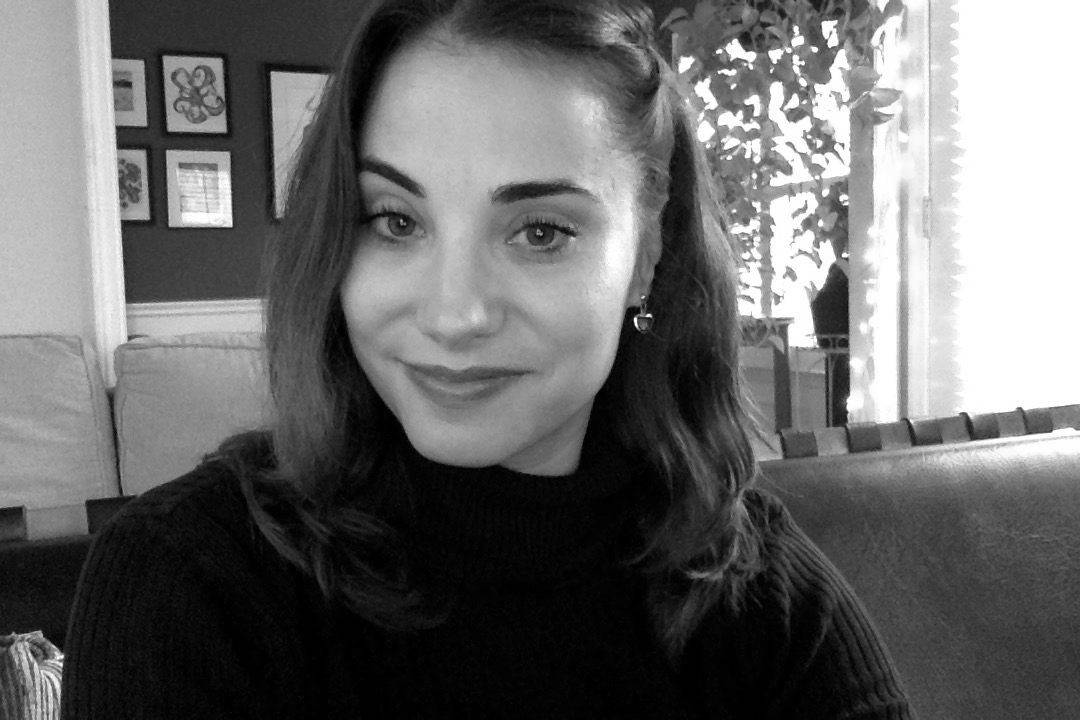
Elizabeth Quirk has an MA in Literature from Texas State University in addition to her BA in English from UNC-Chapel Hill. "A Portrait of the Artist as a Young Woman" was shortlisted for the CRAFT 2025 Short Fiction Prize. Other awards for her writing include an honorable mention for the 2024 Plentitudes Prize, first runner-up for the 2023 Robert Day Award for Fiction, a 2022 Pushcart nomination, and the 2021 James Hurst Award for Fiction. She teaches in the English department at Wake Technical Community College and is working on a novel.