
I do it. I nod toward the slotmachine newsfeeds
whirling above the bar and ask why.
They’re blurred, but red and black with grit
and fire, with missiles festooned
in the kiss of our regards. Not mine, I say.
And yet. What are we supposed to do
in an age lacking shame. They tell me
we could have listened, seen shame’s instruction.
I thought it was all about the body, the band of flesh
flashing between seams in homeroom or a vigil mass.
 No, they say. It is a matter of care. We ford the difference
between value and action. Between intention
and execution, a great river of doing between.
Our horses pause when wet to the saddle horn.
          But what’s to be done, I say,
a little more colloquially.
The angels shrug like regulars, tip their Schlitz
to increasingly dramatic angles. And like regulars,
they know this is a repeat conversation.
They settle their tab, leave their rust-flecked broadswords
in the umbrella stand and depart.
The feeds spin faster, start to smoke.
The air in here is thicker with each moment.
I’m talking around the point.
I wanted to believe. To follow willfully
the tail of an empathetic anecdote, to not
worry. But here we are. The children are burning.
Their coughs returning to wind, their flesh
returning to carbon. This is a verb tense that craft
would have us avoid. But here
we are, the present continuous,
watching our paychecks docked to ensure
the kids’ tents stay lit. And not in the nostalgic glow
that is our bread and butter, the shadow puppets
and ghost stories. But the glow that distills ghosts
to being, camouflages them in smoke
so their pets cannot return.
To say nothing of their parents.
                                           To say nothing.
The Ghost Still or: Rhetorical Device By Which We Ask the Angels About the Times
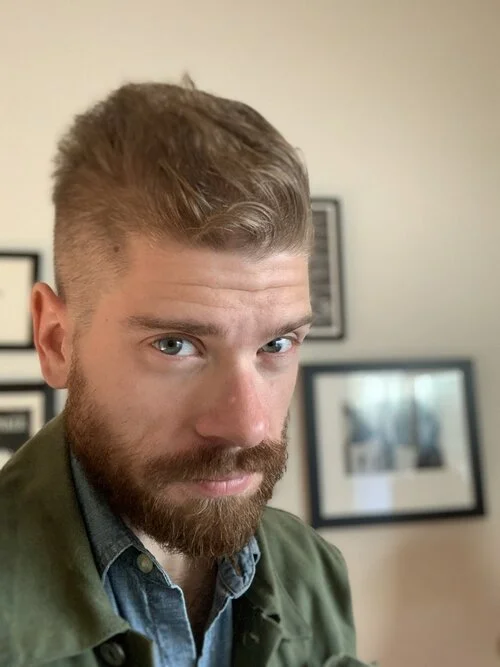
John Dudek's work has appeared in The Southern Review, Cimarron Review, Grist, The Journal, Passages North, and elsewhere. He teaches writing at the University of Illinois at Urbana-Champaign.